MENA
MENA is one of the most important regional frameworks used by global businesses to plan expansion, localization, and market-entry strategy across Arabic-speaking countries. Understanding the scope of MENA helps companies align budgets, messaging, and operational priorities for the region.
What is MENA?
MENA stands for Middle East and North Africa, and it is a business designation used to group countries across these two regions under one strategic umbrella. Most commonly, companies use MENA for sales and marketing planning, but it is also used for production, operations, and logistics. Many North American and European organizations adopt MENA as a practical framework when entering Arabic-speaking markets, then later split the region into smaller clusters as local teams and resources grow. The acronym is also used by international organizations such as the United Nations and the World Health Organization. It is important to note that MENA definitions can vary by company, but the countries in this grouping typically share strong historical, linguistic, and cultural ties.
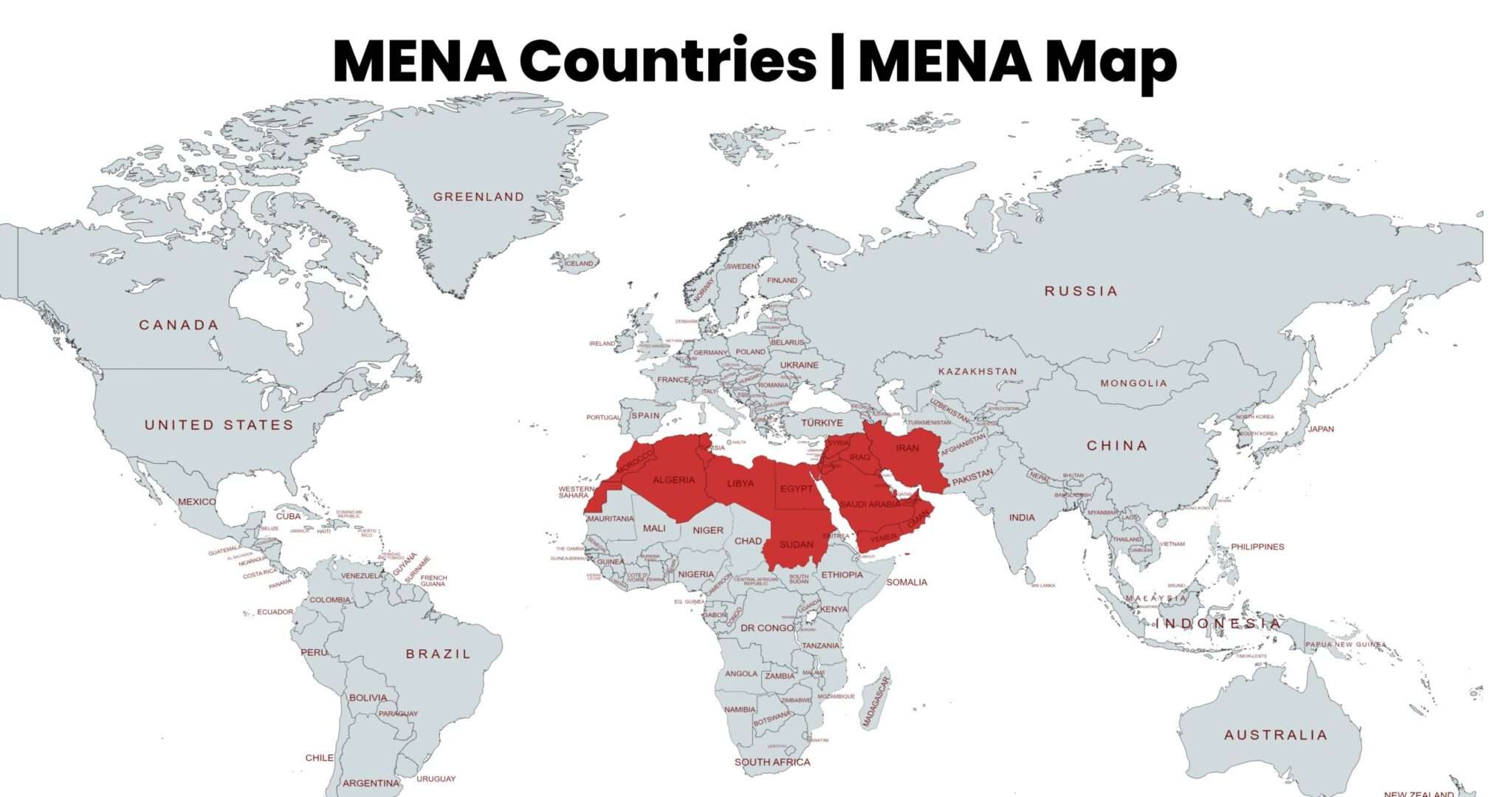
MENA Countries List
- Algeria
- Bahrain
- Djibouti
- Egypt
- Iran
- Iraq
- Israel
- Jordan
- Kuwait
- Lebanon
- Libya
- Morocco
- Oman
- Palestine
- Qatar
- Saudi Arabia
- Somalia
- Sudan
- Syria
- Tunisia
- United Arab Emirates (UAE)
- Yemen
Other Common Acronyms Related to the MENA Region
- EMEA – Europe, Middle East and Africa
- MENAT – Middle East, North Africa and Turkey
- EEMEA – Eastern Europe, Middle East and Africa
- SEMEA – Southern Europe, Middle East and Africa
- SEEMEA – Southeastern Europe, Middle East and Africa
- MENAP – The Middle East, North Africa, Afghanistan and Pakistan
- CEMA – Central and Eastern Europe, the Middle East and Africa
- EMEIA – Europe, the Middle East, India and Africa
- EMIA – Europe, the Middle East, India and Africa
- CEMEA – Central Europe, Middle East and Africa